
(We Promise There’s No Alley)
By Jody Katz, DVM
Years ago, at our old location next to the Harris Teeter, a client asked me a question that made me think. We’d told her we were taking her dog “to the back,” and she wanted to know if that meant the alley behind the building. And there really was an alley back there.
She wasn’t joking. And it’s a fair question, really. We say things all day long that make perfect sense to us and sound vaguely alarming to everyone else. So today I’m going to translate. Here are the things we say at the vet hospital, what you might be hearing, and what we actually mean.
“We’re going to take him to the back.”
What it sounds like: We’re removing your pet from your sight to do mysterious things you’re not allowed to witness. Possibly in an alley.
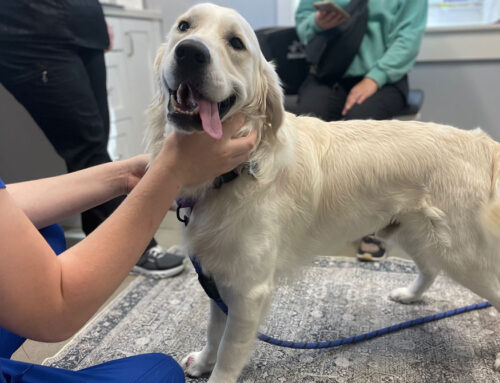
What we mean: We’re taking your pet to our treatment area, the part of the hospital with the good lighting, the equipment that doesn’t fit in an exam room, and extra trained hands to hold a wiggly patient safely and gently.
Something that surprises people: most pets are very comfortable back there. We use calm voices and a low-stress approach: padded places to stand, treats, peanut butter, unhurried hands. In the exam room, some pets feel protective of their owner or want to hide behind them. Those feelings often ease in the treatment area, where everything is quiet and simple. Most pets settle right in.
If a pet truly is too anxious, we will tell you, and we’ll talk about medication to reduce that anxiety so visits get easier over time instead of harder. Nobody has to white-knuckle it here, pet or person.
We’re not hiding anything. There’s just more room, more help, and usually less stress for your pet.
“The doctor is in a room.”
What it sounds like: The doctor is standing in a room somewhere, presumably available, choosing not to talk to you.
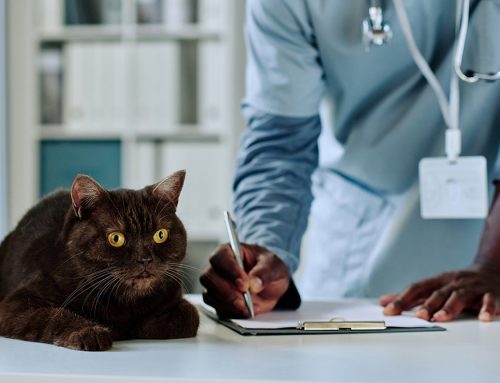
What we mean: The doctor is in an appointment. And then another one. Our appointment schedule runs consistently through the day, and we like it that way. It means we can give every patient our full attention for as much time as each case needs. Not the time the schedule allots, the time the case needs.
The trade-off is that “in a room” usually means the doctor can’t come to the phone right then. Lunch and the end of the day are when doctors sit down to review results and return calls, when they can give those things real attention instead of squeezing them in between patients.
I know the wait is hard, especially when you’re waiting on results. More on that in a minute.
“We’d like to run some bloodwork.”
What it sounds like: Something must be wrong.
What we mean: Lab work is one of the most useful tools we have, and we recommend it for lots of different reasons. Most of them are routine.
Organs don’t have facial expressions. I can look at your dog, listen to his heart, feel his belly, and his kidneys, liver, and thyroid will tell me nothing from the outside until a problem is quite far along. Lab work lets us see what the physical exam can’t.
So when do we suggest it?
Before anesthesia. Most of the time everything comes back normal, and that’s exactly what we want. But there have been times we found something significant and didn’t proceed. I’ve found kidney issues before a pet ever looked or acted sick, and because the stress of anesthesia and surgery could have made things worse, it mattered to know beforehand.
For pets on chronic medications. Long-term medications are wonderful tools, and monitoring lab work is how we make sure they stay that way. It tells us the medicine is doing its job and the body is handling it well.
When a pet isn’t feeling well. Vague symptoms (a little quieter, a little pickier, drinking more water) can point in a dozen directions. Lab work helps us narrow things down instead of guessing.
When a pet got into something. Because they do. Constantly.
As pets age. Our pets age faster than we do, and they can develop metabolic disease along the way: kidney, liver, thyroid, and more. Catching those changes early, while they’re still small and manageable, is one of the best gifts we can give an older pet.
Lab work doesn’t mean we’re worried. It’s how we take care of the parts of your pet we can’t see.
“We’ll reach out with your pet’s results.”
What it sounds like: Results arrive instantly, like a text message, and if you haven’t heard anything, someone is sitting on bad news.
What we mean: Some tests run in our own lab and come back in minutes. Others go to an outside laboratory and take days, and that’s normal, not ominous. Sometimes it takes several days just to have complete results, because different parts of a panel finish at different times. Unless we’re expecting a stat result, hearing from us about two days later is typical, and we’ll reach out as soon as the review can be done. Silence almost never means we’re working up the nerve to deliver bad news. It usually means the results aren’t fully in yet, or the doctor hasn’t had a chance to sit down with them.
And I do mean sit down with them. The doctor who examined your pet is the one who needs to review those results. They’re the one who felt that belly and heard that heart, and results only mean something next to the exam. I don’t want anyone calling you with half a picture. Before that call happens, we want to review the whole panel, compare it to your pet’s history, and know what we’re going to recommend. A rushed call between appointments that ends in “hmm, let me look closer and call you back” helps nobody.
We cared about this enough that years ago we created a position for it. We call them a Doctor Client Liaison, or a patient care coordinator. Their whole job is making sure you’re not waiting all day for answers. They do an initial review of incoming lab work and bring anything abnormal to the doctor’s attention right away. Many results are actually relayed to clients by the liaison, once the doctor who saw your pet has reviewed them and made a plan. Usually that starts with a comprehensive email laying everything out, followed by a phone call from the liaison or the doctor. We do it in that order on purpose. The email gives you time to read through the results at your own pace, so when the phone rings you’ve already had a chance to think about your questions instead of trying to absorb everything on the spot. The liaison also reviews messages, handles refill requests, answers questions, and triages concerns, so plenty gets resolved without waiting on a doctor at all.
When a question truly needs a specific doctor’s opinion, the liaison makes sure it gets in front of them. I’ll be honest: that answer may take most of the day, because the doctor needs to be out of appointments to give it real thought. But you won’t be forgotten. Most clients have no idea this position exists. Most hospitals don’t have one. We created ours because “wait until 5:30 and hope” wasn’t good enough.
We try to set expectations about timing whenever we send tests out. I also know that even with expectations set, you’re going to worry. I get it. If you call to check in, nobody minds. Just know that “the doctor hasn’t called yet” almost always means “the doctor hasn’t been able to review it yet,” not that anything is wrong.
The hardest wait of all is biopsy results. Histopathology takes about a week to come back, and it’s scary, because often the whole reason we sent it is to check for cancer. Owners ask me, “What did it look like?” and I hesitate to answer. I’ve seen awful-looking things come back completely benign, and innocent-looking little masses come back as something serious. That’s exactly why we send it to a pathologist instead of guessing, and why I’d rather give you a real answer in a week than a wrong one today.
“We’d like to sedate her for that.”
What it sounds like: Danger. Anesthesia. Risk. “Can’t you just hold her down?”
What we mean: A terrified, thrashing pet getting x-rays, a wound cleaned, or even a nail trim is often in more danger, and far more distress, than a calm, lightly sedated one. Sedation isn’t us taking the easy way out. We’re choosing the version of the procedure where your pet doesn’t panic, nobody gets hurt, and we get it done right the first time.
The scared memory is the part people underestimate. Pets remember being wrestled. They don’t remember a nap.
“It’s a drop-off appointment.”
What it sounds like: Your pet will sit alone in a cage all day, ignored and forgotten.
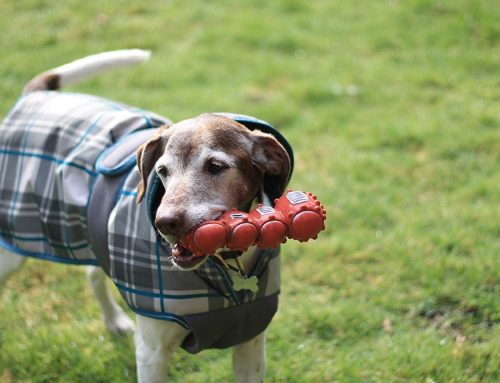
What we mean: Your pet spends the day right in the middle of everything. Our cages and runs are in the treatment area, the busiest part of the hospital, so there are team members around them all day long. They get beds or thick towels, they get walked outside, and most of them just curl up and take a nap. Clients picture anxious pacing; what we usually see is a dog snoring through the morning.
The real advantage is timing. A drop-off lets the doctor examine your pet as soon as time opens up, which isn’t something we can predict ahead of schedule, so it beats asking you to sit in the lobby waiting for a window that might not come until later. Sometimes we’re looking pets over during lunch. For workups where we’re waiting on test results anyway, it’s often the better appointment, not the consolation prize.
It also gives us room for the things that need lead time, like medications some pets need before a procedure.
If a pet seems anxious or worried being here, we call you right away and let you know. Sometimes that means picking them up a little early after a procedure. We’d always rather have them home and comfortable than here and stressed.
The Short Version
- “The back” is our treatment area, not an alley. Calm voices, treats, peanut butter, and low-stress handling. Most pets are comfortable there, and if yours isn’t, we’ll tell you and make a plan.
- “In a room” means in appointments, which run consistently through the day. Doctors review results and return calls at lunch and after appointments, and our Doctor Client Liaison works all day to get you answers faster.
- Lab work has many routine reasons behind it: anesthesia safety, medication monitoring, aging, and pets who got into things. Organs don’t have facial expressions, so it’s how we see what the exam can’t.
- No news on lab results is almost never bad news. Complete results can take a couple of days, biopsies about a week, and the doctor who saw your pet reviews everything before we reach out.
- Sedation is often the kinder, safer option, not the risky one.
- A drop-off means your pet spends the day in the middle of everything, with beds, walks, and usually a good nap, and it lets the doctor see them the moment time opens up.
If we’ve ever said something that confused or worried you, ask us. We’d much rather explain than have you drive home wondering about the alley.



Leave A Comment